

MENU
Efficient Power Design for Regenerative Energy

Instantly capture regenerative energy from braking to suppress peak power and extend runtime.
Reduce instantaneous load and thermal stress on batteries—achieving longer life, extended maintenance intervals, and stable operation.
Shipment Record (cells)
100,000,000+
units
Kick-start your technical evaluation and comparison process.
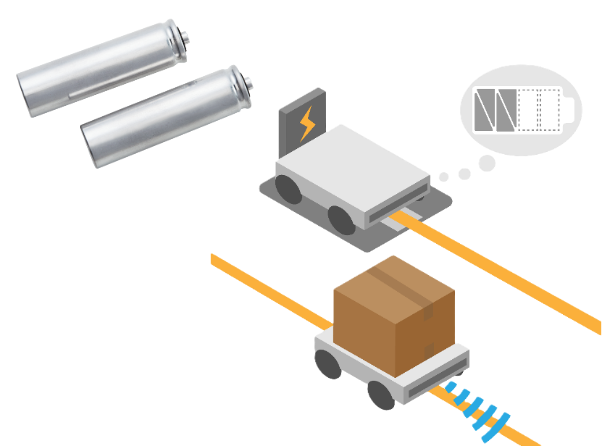
In AMR/AGV systems, regenerative energy is typically dissipated as heat through braking resistors. This creates challenges for energy efficiency, runtime, and operational costs.
By integrating Panasonic's Supercapacitors (Electric Double Layer Capacitors / EDLCs) into the power system, you can create an architecture that instantly recovers unused energy and reuses it during acceleration. This suppresses peak power while simultaneously extending runtime and reducing energy consumption (e.g., 1.5× continuous runtime increase and approximately 200 Wh/day reduction under representative conditions).
Supercapacitors rely on physical charge/discharge with no chemical reactions, making them highly resistant to high-frequency cycling. They reliably capture regenerative peaks on the order of milliseconds to seconds. They maintain stable performance even at -20°C or lower, enabling deployment in cold storage and other harsh environments.
As a result, instantaneous load and heat generation on the main battery are leveled (peak shaving). This extends battery life, reduces maintenance burden, and improves system reliability.
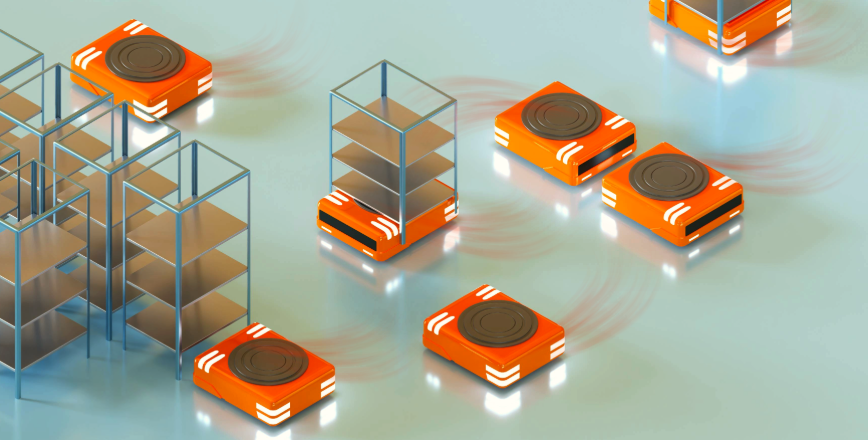
Phenomenon: Regenerative energy during deceleration is dissipated by braking resistors, increasing charging cycles and heat generation.
Impact: Reduced energy efficiency (kWh/km), shortened battery life from frequent charging, and elevated system temperatures.
Result: An optimal circuit architecture and energy storage device capable of recovering and reusing energy without delay is required.

Phenomenon: High-rate peak currents during acceleration and deceleration concentrate on the battery, causing IR drop, voltage fluctuations, heat generation, and stability risks.
Impact: Stable operation requires careful attention to ripple noise suppression, IR drop management, and voltage balancing during series connection.
Result: Peak current buffering capable of handling instantaneous high currents, with robust design guidelines for series balancing and temperature compensation, is required.
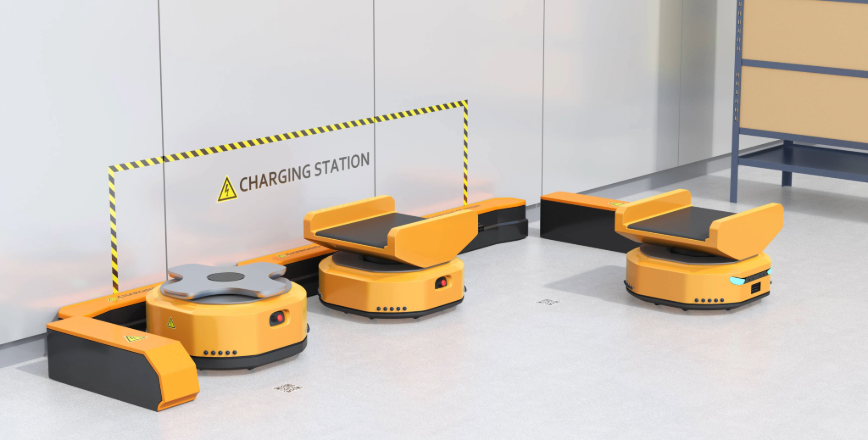
Phenomenon: Storage device lifespan and ESR fluctuate significantly with temperature, applied voltage, and ripple current. This necessitates strict temperature management and design margins.
Impact: Beyond addressing abnormal heat and environmental factors (humidity, salt damage), fail-safe design based on FMEA is essential.
Result: Long-term supply availability, detailed reliability data (life curves, temperature characteristics), and technical support directly impact device adoption decisions. Comprehensive evaluation resources and application notes are also critical.

Recover regenerative energy during deceleration and reuse it for acceleration. Under representative conditions, 1.5× continuous runtime and approximately 200 Wh/day reduction can be achieved, contributing to TCO (Total Cost of Ownership) reduction.
Supercapacitors absorb peak currents, suppressing waste heat from braking resistors. This reduces heat generation and degradation in the main battery while lowering overall power consumption.
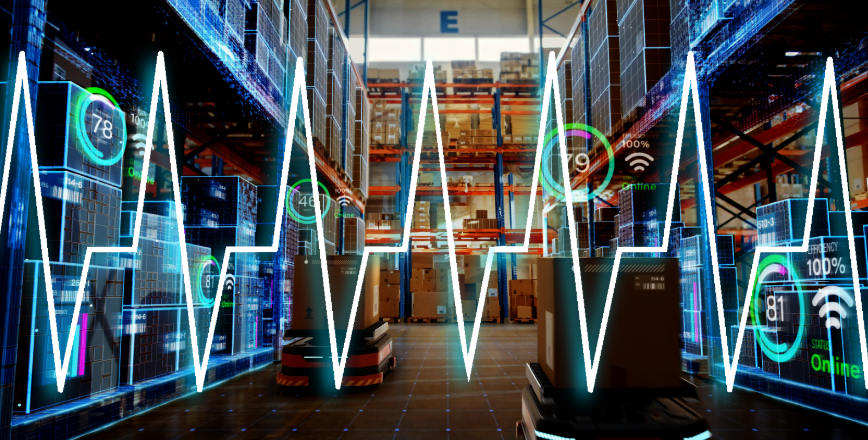
Reliably captures regenerative peaks on the order of milliseconds to seconds for reuse during acceleration.

Enables rapid charge/discharge in cold storage environments, reducing operational stoppage risk.

Withstands over 1 million cycles due to chemical-reaction-free storage. Backed by over 100 million cells deployed in automotive applications.

Supercapacitors share instantaneous load with the power supply, reducing IR drop and enhancing stability.
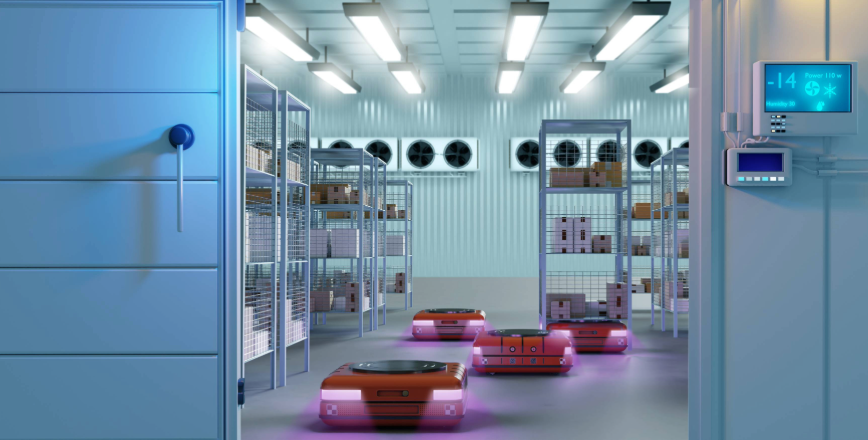
Placement:
Transporting picked goods between shelves in freezer environments with frequent acceleration-deceleration cycles.
Challenge:
Battery internal resistance rises at low temperatures, concentrating instantaneous peaks and causing heat generation and voltage drops. Regenerative energy is wasted as heat in braking resistors.
Solution:
Series-connected EDLCs with balancing circuits instantly recover regenerative energy during deceleration for reuse during acceleration. Leverages stable charge/discharge performance at low temperatures.
Observed Effects:
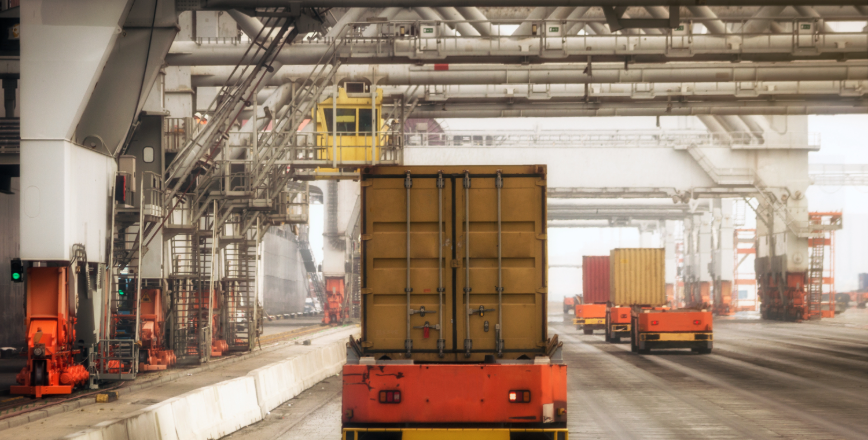
Placement:
Long-distance transport of 1-ton class pallets with high instantaneous currents during acceleration and climbing.
Challenge:
Peak currents concentrate on the battery, causing heat generation, voltage drop, and shortened life. Regenerative energy is lost as heat.
Solution:
EDLCs positioned as a peak power buffer superimpose output during acceleration to level battery load; regenerative energy charges the EDLC during deceleration.
Observed Effects:
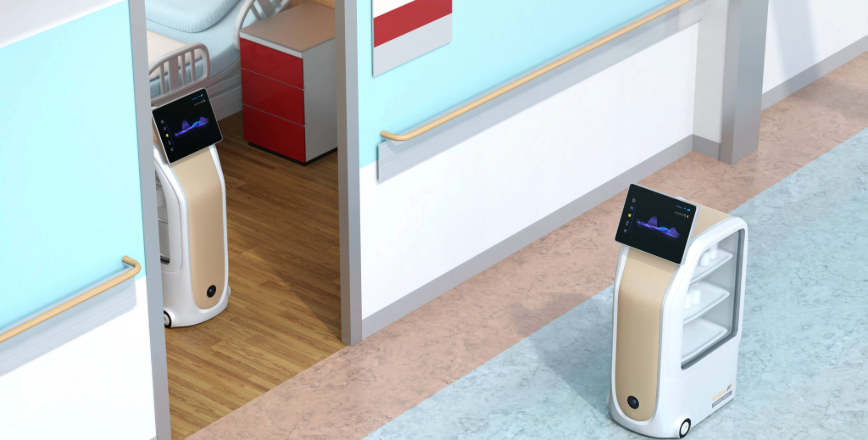
Placement:
Inter-floor transport of medicine and specimens requiring quiet, energy-efficient nighttime operation.
Challenge:
Regenerative energy is lost during frequent stop-and-go cycles, and battery margin is insufficient during nighttime non-charging periods.
Solution:
EDLCs capture and reuse regenerative energy to lower average power consumption and suppress heat through peak reduction. This enables operation with minimal cooling fan usage, reducing noise.
Observed Effects:

*This product is currently under development. Specifications are subject to change without notice.
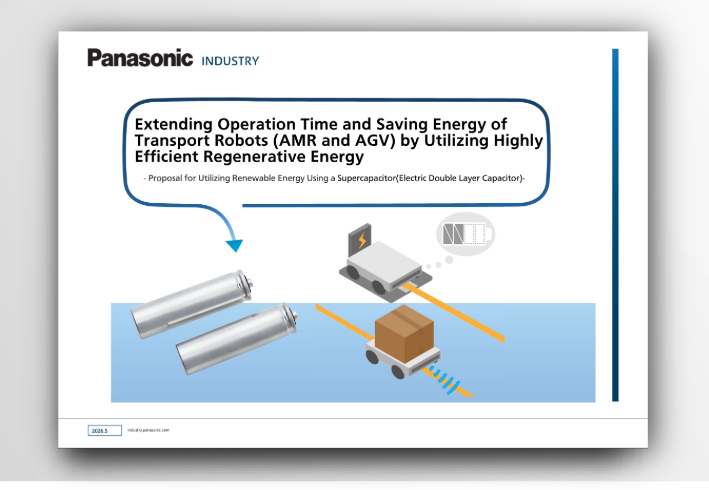
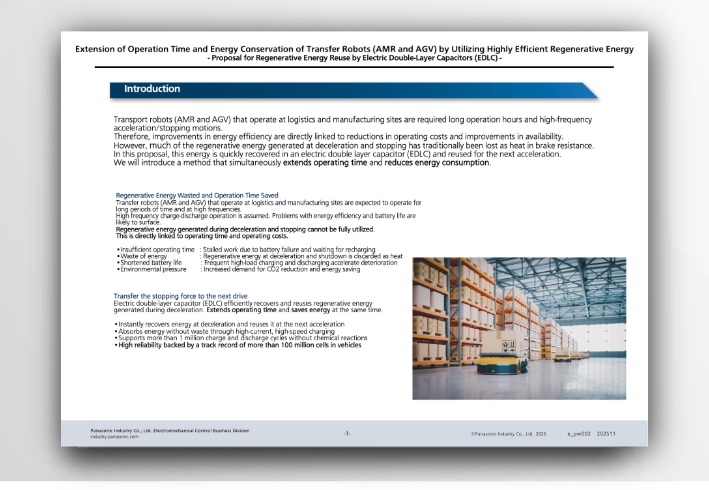
- Proposal for Utilizing Renewable Energy Using Electric Double-Layer Capacitors (EDLC) -
Kick-start your technical evaluation and comparison process.


Contact
Technical Inquiries & Engineering Consultation
From spec checks to pre-deployment studies and design support, Panasonic Industry engineers are here to help.
Typical requests:
Detailed specifications and technical data
Design suitability checks
Customization feasibility
Safety and durability information
Get in touch — we’ll connect you with the right technical expert.

 Area/Country
